

In the event that your dog loses their collar, escapes from your garden, is stolen, or just gets lost while out on a stroll, dog microchipping can help you reunite.
Like an injection, the microchip may be placed subcutaneously on the scruff of the neck with ease. It is lifelong and around the size of a huge grain of rice. It is an ID system that is permanent.
Every chip has a unique number that will be linked to your information and that of your pets. A national database then has these details. The majority of veterinarians, including Boundary veterinarians, local authorities, and rescue homes, will have access to a portable scanner that can read these facts, guaranteeing that the Central microchipping database will have your contact information. A quick phone call can bring you and your dog back together after they have been scanned and recognised by their microchip.
Microchipping your Dog
Sedation is not necessary for the implantation, the microchip is so small it cause minimal discomfort and can easily be done in a routine consultation. If you don’t know if your pet already has a microchip, we can check for you, one of our team at Boundary vets can scan your pet and check for a working microchip. We would always check that your dog hasn’t already got a microchip before another one is implanted.
Although it may be done at any age, pet microchipping in Leicester is frequently done in conjunction with vaccines or neutering. A little microchip, about the size of a rice grain, is inserted just under the skin and stays there to serve as your pet’s unique identification.
A microchip scanner can read the chip’s information if your pet disappears, gets stolen, or ends up at a vet office or rescue facility. This enables the organisation to identify you as the pet’s owner and assist in getting you and your pet back together.
No matter where your pet is in the UK, its microchip is recorded on a national database, guaranteeing that you can track them down.
What Is Dog Microchipping?
All dogs must now be microchipped by law, and pups must have their vaccinations by the time they are eight weeks old in order for the breeder to relinquish ownership. If your dog is not microchipped, you risk a fine of up to £500.00. It’s also important to remember that in order to obtain a pet passport, your dog must be microchipped if you intend to go overseas.
They would all be able to read your pet’s chip, find your information, and gladly reunite you two if your dog was discovered and brought to a vet office, animal shelter, or the dog warden, among other places!
For more information ,or if you have any questions about dog microchipping, please speak to one of our friendly team members, who will be only to happy to help.
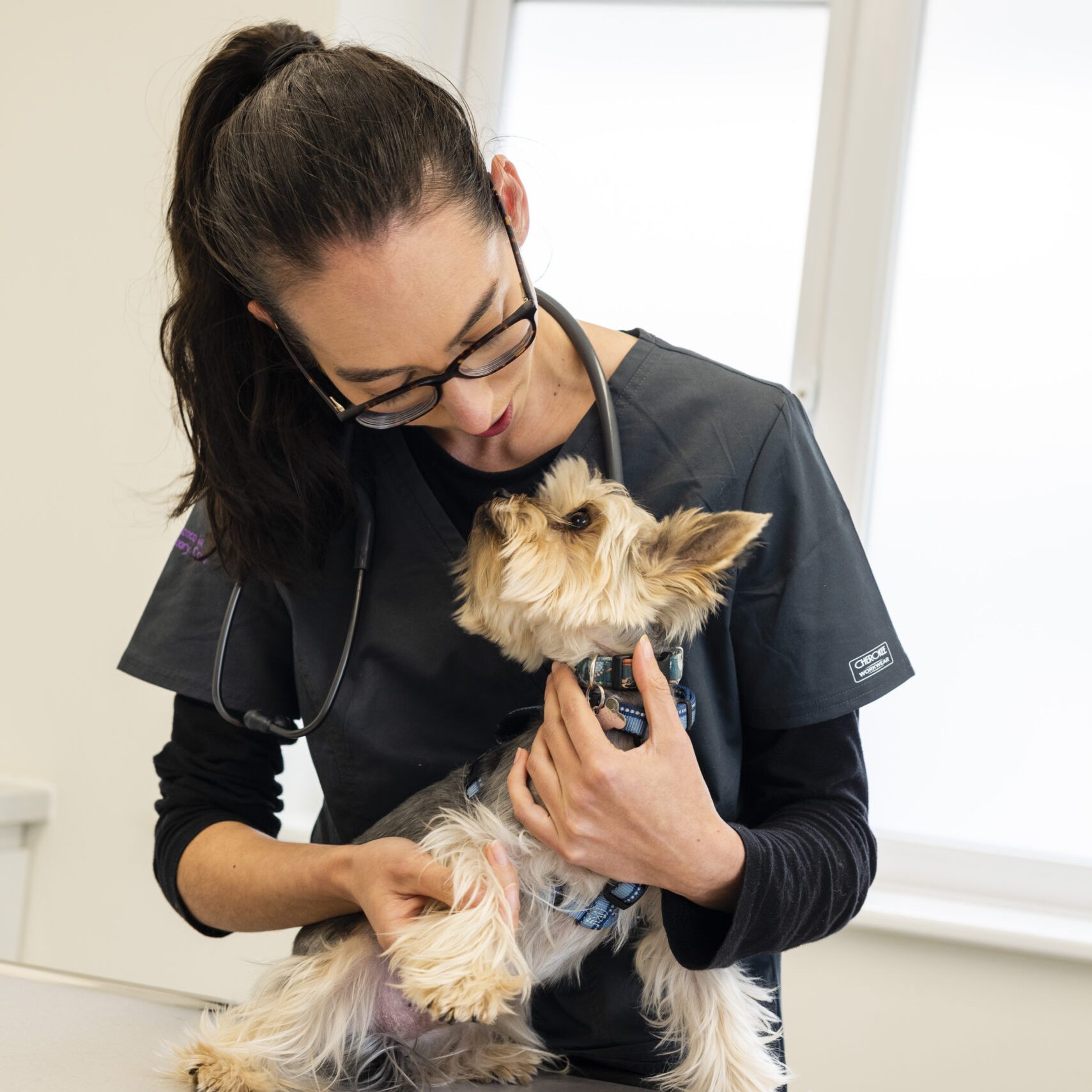
Why choose Kings Vets for microchipping?
At Kings Vets, we treat every pet like family. Our knowledgeable team ensures your dog receives the highest standard of care. We’re also here to guide you through updating your details, registering your chip, and offering ongoing support for your pet’s wellbeing.
For more information ,or if you have any questions about dog microchipping, please speak to one of our friendly team members, who will be only to happy to help.
Dog Microchipping FAQs
What is a Dog Microchip?
A quick and long-lasting way to identify your dog is through microchipping. A tiny electrical chip, around the size of a rice grain, is inserted between the shoulder blades, just under the skin. A unique number on each chip connects to your contact information stored in a safe national database.
The microchip does not include your personal information.
Is microchipping my dog a legal requirement?
Indeed. By the time they are eight weeks old, all dogs in the UK are required to be microchipped. Under the 2015 Microchipping of Dogs (England) Regulations, this is a legal need. A punishment of up to £500 might be imposed on noncompliant owners.
Does microchipping hurt my dog?
Absolutely not. Similar to a standard vaccine, the process is rapid and just slightly uncomfortable for a little period of time. The majority of dogs accept treatment quite well, and no anaesthetic is needed.
What information does the chip contain?
Only the unique ID number is stored on the chip itself. A central database securely holds your name, address, phone number, and pet’s information. When your dog’s chip is scanned, usually by a veterinarian, animal shelter, or dog warden, this data is retrieved.
Can All Pets Be Microchipped?
Most pets, even bigger birds and tortoises, can be microchipped. Please get in touch with us if you have any questions about whether your pet can be microchipped, and our experienced staff will go over your best alternatives.
What happens if I move house or change my phone number?
You are required by law to keep your contact details up to date in the Microchip database. If you provide false information and your dog goes missing, you could not even get your dog back.
Where can I get my dog microchipped?
Appointments for microchipping can be made directly with any Kings Veterinary clinic. Our skilled veterinary staff will make sure your pet has the treatment done safely and with the least amount of stress possible.
Our Microchipping Services
Find out more about microchipping your pets
Find out more about microchipping your Cat
Find out more about microchipping your Rabbit